
Today, discussions about Dharmendra Pradhan’s resignation are dominating headlines across India. While opinions on the issue vary, this article focuses on the facts rather than political debates.
We aim to understand what happened during the NEET 2026 controversy, why students across the country raised their voices, and how the events eventually led to Dharmendra Pradhan’s resignation. This is a fact-based analysis designed to help readers understand the issue from a student and education perspective—without political bias.
We have heard every day seeing only Dharmendra Pradhan Resignation News: The resignation of Union Education Minister Dharmendra Pradhan has become one of the biggest political developments in India in 2026. The decision came after weeks of nationwide protests, growing public anger, and increasing pressure over alleged examination irregularities, particularly concerning major entrance exams like NEET.
Many students, parents, and education experts had been demanding accountability after repeated concerns about exam security and fairness. Eventually, Dharmendra Pradhan stepped down, saying he wanted to protect students’ future and prevent the issue from causing further unrest.
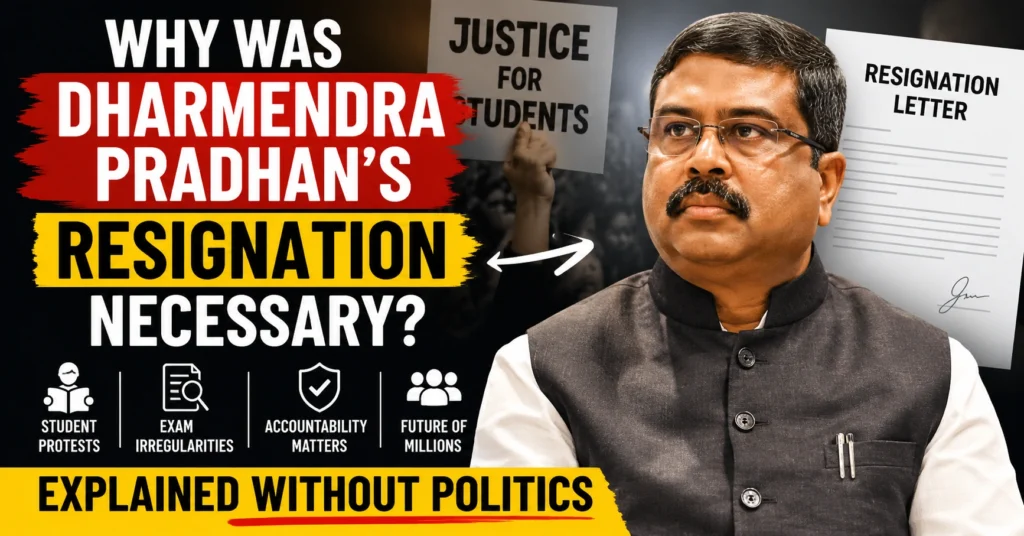
What Led to Dharmendra Pradhan’s Resignation?
Several factors contributed to the resignation:
1. Alleged Exam Paper Leak Controversy
The biggest reason was the controversy surrounding alleged leaks and irregularities in national entrance examinations.
Students across India questioned the transparency of the examination process, leading to widespread criticism of the education system. Investigations into the matter increased public demand for accountability.
2. Nationwide Student Protests
Large student demonstrations were organised across different states.
Young people demanded:
- Fair examinations
- Better transparency
- Stronger action against corruption
- Ministerial accountability
The protests continued for several weeks and attracted national attention.
3. Public Pressure on the Government
As protests intensified, opposition parties, education activists, and civil society groups increased pressure on the central government.
Many believed that accepting responsibility at the highest level was necessary to restore public confidence in India’s examination system.
4. Moral Responsibility
In his resignation message, Dharmendra Pradhan said that he had always accepted responsibility for the situation.
He stated that the issue was not about his personal position but about protecting the future of India’s youth and ensuring that further unrest did not harm students.
Was the Resignation Legally Required?
No.
There was no legal requirement forcing Dharmendra Pradhan to resign.
Instead, the resignation is widely viewed as a political and moral decision taken amid sustained public pressure and demands for accountability.
Why Many People Considered the Resignation Necessary
Supporters of the resignation argue that it was necessary because:
- Students had lost confidence in the examination process.
- Alleged exam irregularities affected millions of candidates.
- Accountability was needed to rebuild trust.
- Education reforms required a fresh start.
These arguments became central to the nationwide protests.
What Happens Next?
Following the resignation, attention is expected to focus on:
- Reforming the examination system.
- Strengthening exam security.
- Improving transparency in national entrance tests.
- Restoring confidence among students and parents.
Government agencies are also expected to continue investigations into alleged examination irregularities.
Impact on Students
For students preparing for competitive exams, the resignation itself does not automatically change admission processes. However, many hope it will lead to:
- More secure examinations
- Better monitoring systems
- Faster investigations into malpractice
- Increased transparency in future exams
Conclusion
Dharmendra Pradhan’s resignation became necessary in the eyes of many because of mounting public pressure, nationwide student protests, and concerns over alleged examination irregularities. While no law required him to step down, the move has been widely interpreted as an effort to take political and moral responsibility and help restore confidence in India’s education system.
The coming months will be crucial as policymakers work on reforms aimed at ensuring fair, transparent, and secure examinations for millions of students across the country.
FAQ
Why did Dharmendra Pradhan resign?
He resigned following nationwide protests, public pressure, and controversy over alleged irregularities in major entrance examinations.
Was Dharmendra Pradhan forced to resign?
There is no official confirmation that he was legally forced to resign. The decision has been presented as one taken in response to political and moral responsibility amid public pressure.
Will the resignation affect upcoming exams?
Current examinations are expected to continue under the government’s existing framework, while discussions on reforms and stronger safeguards are likely to continue.